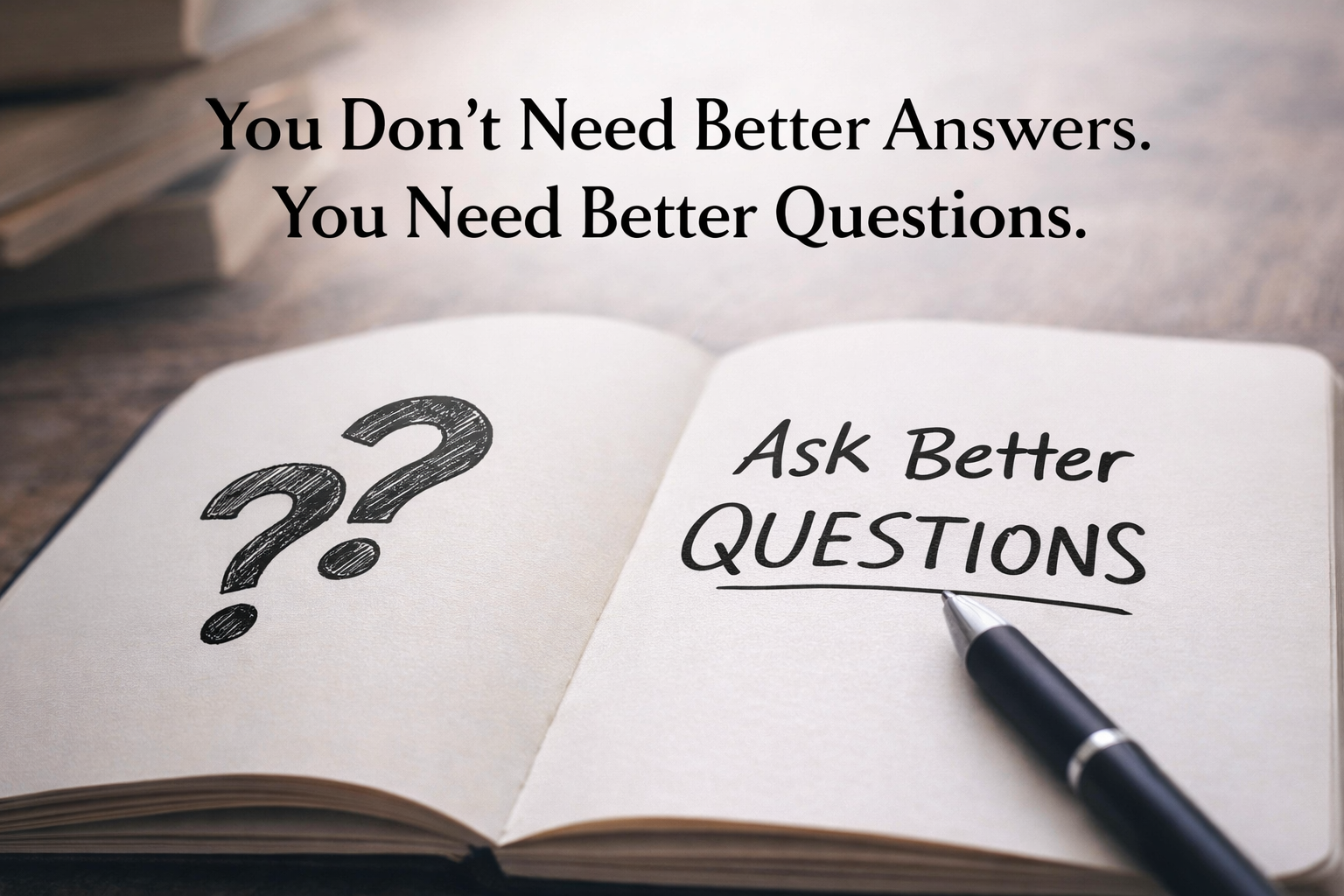
They stall because we ask questions that close things down instead of opening them up.
The good news?
Improving how you communicate doesn’t require clever scripts, confidence tricks, or learning how to “sound smarter”.
It starts with small shifts in how you ask.
Questions do more than gather information.
They shape how safe someone feels.
They influence how deeply people think.
They signal whether you’re curious, rushed, judgemental, or genuinely engaged.
When we default to closed or surface-level questions, conversations stay shallow. When we ask open, thoughtful questions, people expand and so does the quality of the exchange.
Below are some simple swaps you can start using straight away.
“Did you enjoy it?”
Try asking:
“What part stood out to you the most?”
This invites detail, reflection, and meaning not just a yes or no.
“Are you busy at the moment?”
Try asking:
“What’s taking up most of your time right now?”
This opens the door to context, priorities, and real insight.
“Do you like your job?”
Try asking:
“What do you enjoy most about your work?”
This removes judgement and helps people reflect on what energises them.
“Does that make sense?”
Try asking:
“How does that land with you?”
It feels more collaborative and respectful especially in professional conversations.
“What’s wrong?”
Try asking:
“What’s been weighing on your mind lately?”
This creates safety and space, rather than pressure to respond quickly.
“Are you happy with the decision?”
Try asking:
“What about this decision made you want to go with it?”
This encourages people to articulate their thinking, not defend it.
“Can you explain that again?”
Try asking:
“Can you walk me through how you see it?”
It signals curiosity rather than confusion.
“Can I pick your brain?”
Try asking:
“What ideas can you share with me to help me develop this?”
This respects someone’s expertise and invites contribution.
Think about your last meaningful conversation.
Which question did you ask that opened things up?
And which one might you rephrase next time?
These aren’t big techniques.
They’re small skills.
Practised daily, they change how conversations feel at work, at home, and everywhere in between.
Communication skills aren’t just “nice to have”.
They affect:
The people who progress most easily in their careers are rarely the loudest or most polished. They’re the ones who ask better questions.
If you’re interested in developing practical communication, self-awareness, and clarity around how you work best, explore more at:
That’s where small skills turn into lasting change.