Resilience is often framed as endurance.
Pushing on.
Coping better.
Holding more.
But the people who sustain themselves well over time don’t simply tolerate pressure, they adapt intelligently.
They notice when something is no longer working and make small, thoughtful adjustments before burnout forces a bigger reset.
Loss of resilience often shows up subtly:
These aren’t failures of character.
They’re information.
True resilience is not rigid.
It involves:
This requires self-awareness, not toughness.
Resilience improves when people:
Again, these are not dramatic interventions.
They are quiet recalibrations.
People differ in how they process pressure, change, and uncertainty.
Understanding your natural patterns helps you:
Resilience, in this sense, becomes sustainable, because it’s built on realism, not expectation.
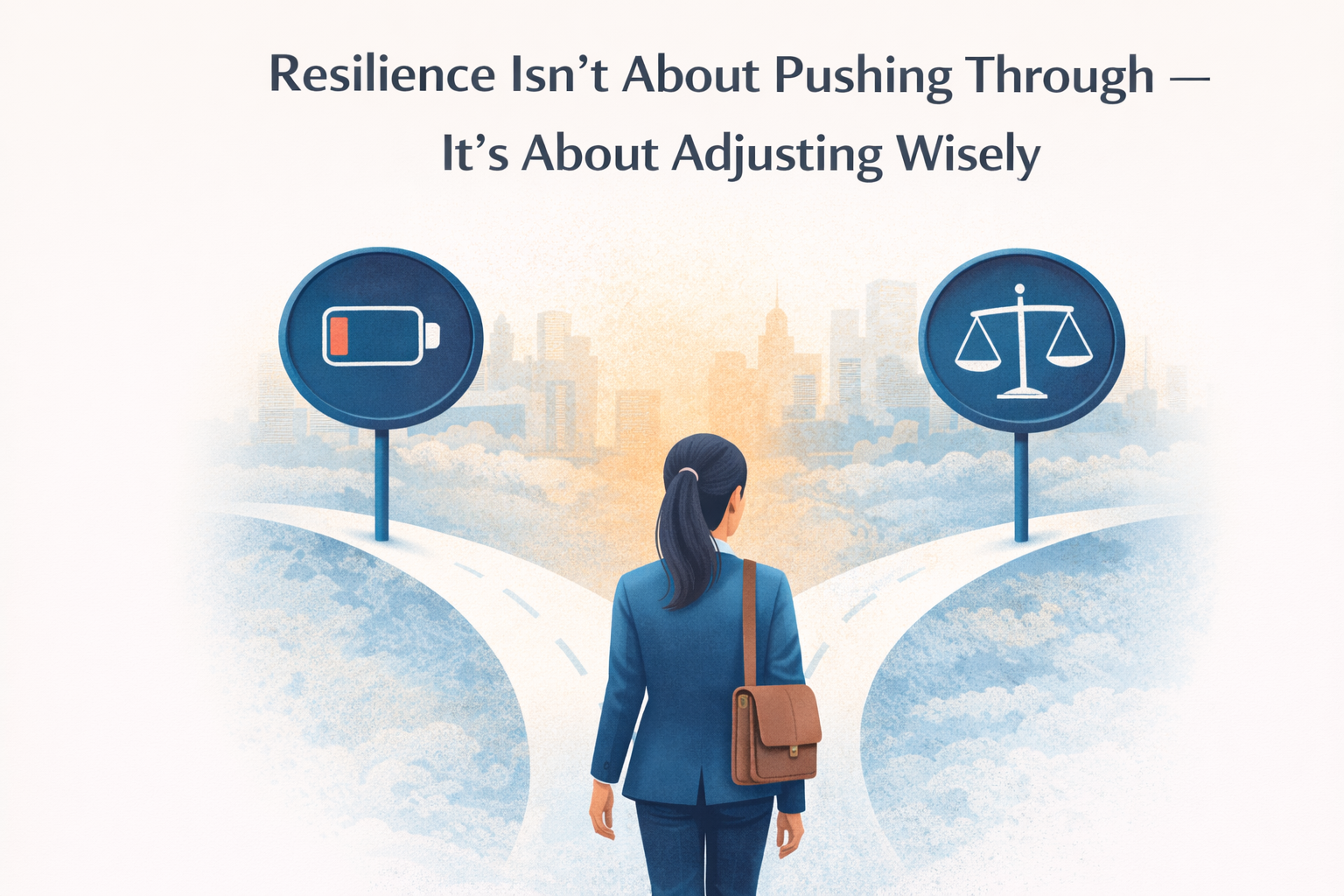
Resilience isn’t about pushing harder. It’s about knowing when and how to adjust.
If you feel interested in understanding your own reselience thresholds and limits, then the PRISM Career Reset can help.